Stop wasting money on useless products


🔥 Introduction
If you’re serious about music production, you already know this:
👉 The quality of your sound depends heavily on the tools you use.
You can have talent, ideas, and creativity — but if your plugins are weak, your final output will always feel limited.
That’s why many producers are now moving away from generic plugins and looking for something more accurate, more musical, and more professional.
One name that keeps coming up is Martinic Audio.
They’re not just another plugin company — they focus on recreating classic instruments and effects with incredible precision.
In this guide, we’ll break down what Martinic Audio offers, why it stands out, and whether it’s worth adding to your setup.
🎧 What is Martinic Audio?
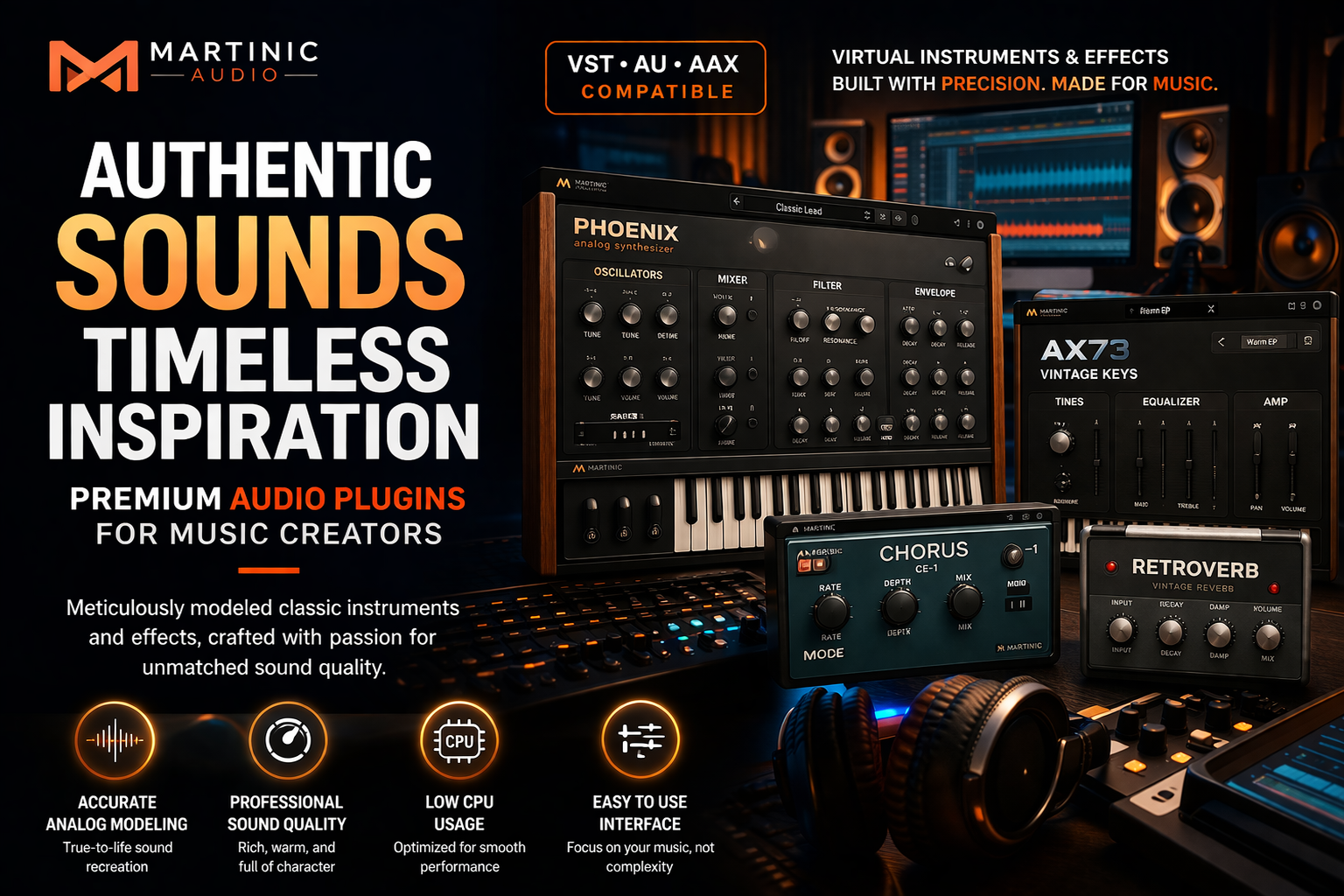
Martinic Audio is a software company that develops high-quality audio plugins, including:
- Virtual instruments (synths, organs, keyboards)
- Audio effects (compressors, filters, amps)
These plugins are designed to work inside music production software like:
- FL Studio
- Ableton Live
- Logic Pro
- Cubase
Their main focus is accurate modelling of classic hardware — meaning you get that analog feel in a digital format.
💡 Why Producers Are Paying Attention
Let’s be real — there are thousands of plugins out there.
So why Martinic?
👉 Because they focus on quality over hype
Here’s what stands out:
- Realistic analog sound
- Lightweight performance (doesn’t slow your system)
- Clean and simple interface
- Professional-grade audio output
These are tools built for people who actually care about sound.
🎹 Key Products & Features
1. Authentic Sound Modelling
Martinic plugins are designed to replicate classic hardware instruments.
Not just visually — but sonically.
You get warmth, depth, and character that many digital plugins lack.
2. VST & Audio Unit Compatibility
You can use these plugins across most major DAWs.
No complicated setup.
Just install and start creating.
3. Low CPU Usage
Unlike heavy plugins that slow your workflow, Martinic tools are optimized to run smoothly.
This matters when working on large projects.
4. Clean Workflow
The interface is simple and focused.
No unnecessary distractions.
Just sound and control.
🎯 Who Should Use Martinic Audio?
This is not for casual users.
This is for people who are serious about their sound.
👉 Best for:
- Music producers
- Beat makers
- Sound designers
- Studio engineers
- Content creators working with audio
If you care about audio quality, this is where it becomes valuable.
🎵 Real-World Use Cases
1. Music Production
Use virtual instruments to create:
- Beats
- Melodies
- Synth sounds
2. Mixing & Mastering
Apply effects that improve:
- Clarity
- Depth
- Balance
3. Sound Design
Create unique sounds for:
- Film
- Games
- Content creation
💰 Is It Worth It?
Let’s keep it honest.
👉 If you’re just starting and using free tools — you might not feel the difference immediately.
👉 But if you’re growing and want better sound quality — this becomes a strong upgrade.
You’re paying for:
- Accuracy
- Sound quality
- Reliability
Explore Martinic Audio Plugins
⚠️ Things to Consider
- You need a DAW (FL Studio, Ableton, etc.)
- Basic knowledge of music production helps
- Not a “beginner toy” — this is real software
📈 Why This Matters for Creators
Better sound = better content.
Whether you’re:
- Uploading music
- Creating YouTube videos
- Producing beats for clients
Your audio quality directly affects how people perceive your work.
🔥 Final Thoughts
In music production, tools don’t replace talent — but they amplify it.
Martinic Audio focuses on delivering realistic, high-quality sound without unnecessary complexity.
If you’re ready to level up your production, this is worth exploring.
📌 Disclaimer
This post may contain affiliate links. If you purchase through these links, we may earn a commission at no extra cost to you.